



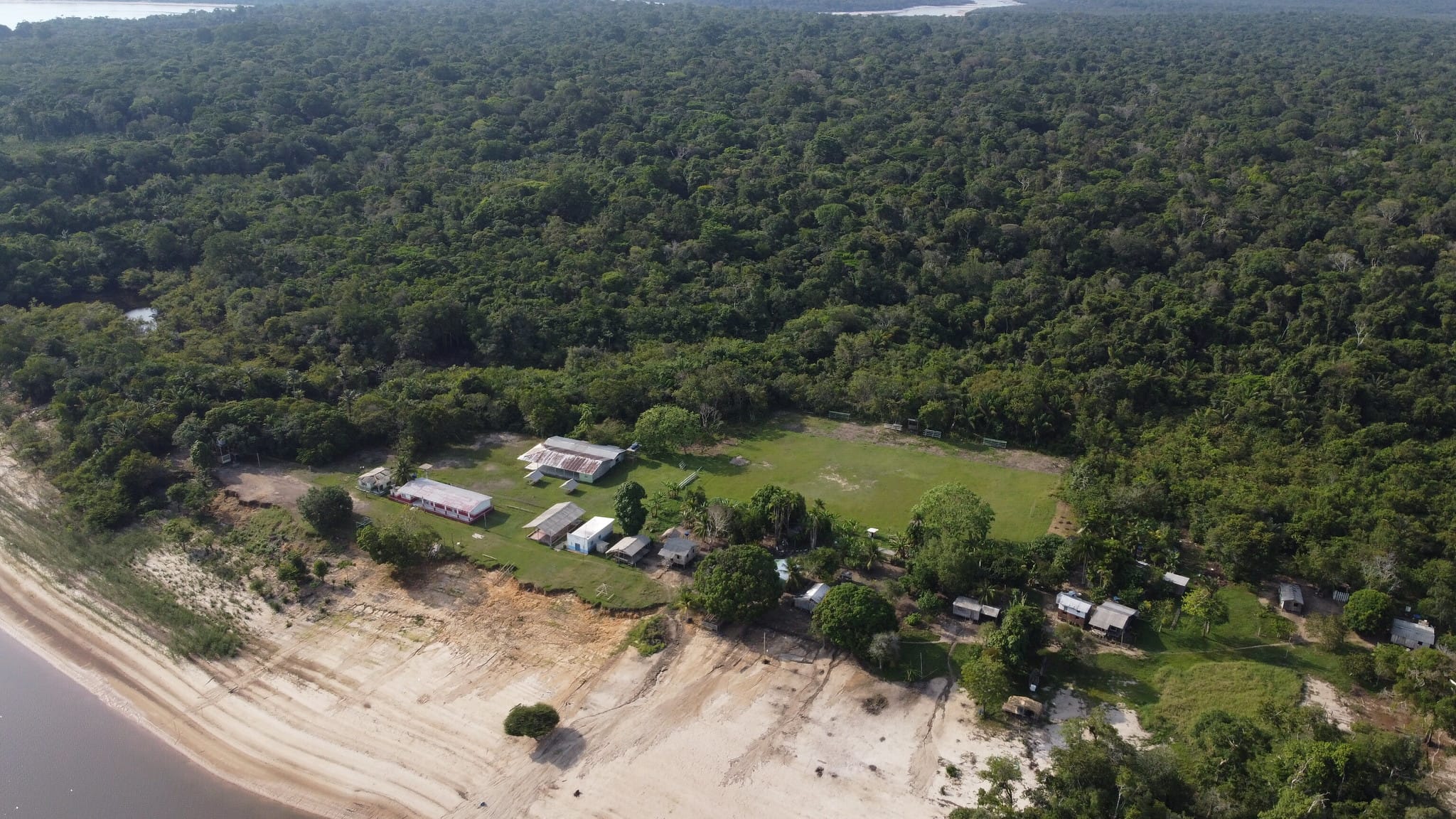
Over the last decade, the pirarucu population in these areas has increased by more than 400%. Other species—such as tambaqui, caimans, turtles, tracajás (a type of river turtle), and manatees—have also benefited. The project now provides income for more than 2,000 families.
It also helps preserve both forest and species, and aims for social and sustainable development, fair trade, and the promotion of native products. Similar efforts exist across the Amazon. The Origens Brasil seal, for instance, is part of a network supporting ethical businesses that value forest peoples and standing forests. Chef Roberto Smeraldi, a consultant for the Amazônia 2030 project, has been a pioneer in connecting Amazon cuisine and products to the rest of the country.
Last week’s connection came via an expedition to the region that included staff from the Chico Mendes Institute for Biodiversity Conservation (ICMBio), Indigenous rights organization Opan, researchers from Idesam, and teams from Fundo Vale and SindRio.
By Daniela Chiaretti in Valor Econômico
Photo: Idesam